Views: 0 Author: Site Editor Publish Time: 2026-09-26 Origin: Site
Picture this: it is a sweltering July afternoon. You step out into your beautifully manicured backyard, only to realize the lawn is radiating heat like an asphalt parking lot. Under direct summer sunlight, standard synthetic lawns can reach blistering temperatures up to 152°F. This extreme heat retention is significantly hotter than ambient air or natural grass, and frankly, it is the primary reason why many property owners hesitate to make the switch.
When a yard becomes temporarily unusable for families or dangerous for pets' paws, the investment feels wasted. However, this thermal phenomenon is not an unavoidable flaw of all synthetic turf. As an engineer evaluating polymer performance, I can tell you that the secret to a comfortable outdoor space lies entirely in modern manufacturing precision. By upgrading factory machinery and rethinking the chemical composition of the fibers, the industry has engineered highly effective cooling solutions.
In this comprehensive guide, we will break down the thermodynamics at play, analyze the core materials, and reveal how cutting-edge production technologies are fundamentally changing the landscape of cooler, climate-adaptive lawns.
Heat Absorption Mechanics: Turf heat is driven by the absorption of infrared (IR) radiation in standard plastic polymers, compounded by the high thermal mass of traditional infills like black crumb rubber.
Optimal Baseline Materials: Polyethylene (PE) stands out as the most effective baseline polymer. It offers a scientifically proven balance of durability, softness, and natural temperature regulation.
Manufacturing Precision is Non-Negotiable: The uniform integration of UV-reflective additives during the extrusion process is the single most critical step in engineering cooler surface temperatures.
Systematic Cooling Approach: Achieving a reliable cooling system requires a multi-layered approach: advanced yarn profiles (W or C shapes), lighter co-extruded colors, and non-rubber evaporative infills.
To effectively engineer a solution, we must first understand the problem at a molecular level. The heating of synthetic lawns is a predictable physical reaction between plastic polymers, solar radiation, and ambient environmental conditions.
When direct sunlight hits your lawn, it delivers energy across the electromagnetic spectrum—including visible light, ultraviolet (UV) rays, and infrared (IR) radiation. Traditional synthetic plastics act like a sponge for infrared light. Instead of reflecting this IR energy back into the atmosphere, standard turf fibers absorb it. This rapid absorption causes the polymer molecules to vibrate intensely, converting solar energy into sensible heat and drastically spiking the surface temperature.
In contrast, natural grass acts as a biological air conditioner. Through a process called transpiration, organic blades absorb water through their roots and release it as vapor. Synthetic grass obviously lacks this biological mechanism. Furthermore, because artificial fibers have a low thermal mass compared to dense materials like concrete, they heat up rapidly, often reaching peak temperatures within just 15 minutes of direct solar exposure.
Looking at broader industry trends, there is a massive paradigm shift occurring in urban planning and residential landscaping. Market data over the last three years shows a surging demand for climate-adaptive outdoor materials. Property developers are no longer just looking for aesthetic, low-maintenance appeal; they are actively mandating heat-mitigating technologies. As global temperatures incrementally rise, the expectation is that synthetic outdoor surfaces must actively contribute to reducing the urban heat island effect, pushing manufacturers to innovate beyond basic green plastics.
While the plastic yarn absorbs initial heat, the infill material used to weigh down and support the blades plays an equally critical role in long-term temperature retention. Historically, black crumb rubber—derived from recycled car tires—was the industry standard.
From a thermodynamic perspective, black crumb rubber is essentially a highly efficient heat sink. Its dark color absorbs maximum solar radiation, and its dense composition traps that thermal energy, radiating it upward long after the sun has set. Studies consistently prove that replacing traditional black rubber with lighter, non-absorbent alternatives is the most immediate, actionable step a facility manager can take to mitigate surface heat.
Not all synthetic fibers are created equal. The specific polymer chosen during the manufacturing phase dictates the baseline thermal performance of the final product. Understanding these molecular properties is crucial for buyers aiming to install a comfortable landscape.
To make the selection process clearer, let's look at a direct comparison of the three primary polymers used in the industry:
Material Type | Durability & Texture | Thermal Retention | Best Application |
|---|---|---|---|
Nylon (Polyamide) | Exceptionally durable and stiff; can feel abrasive. | High. Retains heat longer than other plastics. | Putting greens, high-traffic commercial indoor spaces. |
Polypropylene (PP) | Lower melting point; prone to warping over time. | Medium-High. Poor long-term UV stability. | Base thatch layers, budget indoor landscaping. |
Polyethylene (PE) | Soft, flexible, and highly resilient. | Low. Naturally diffuses solar radiation. | Premium residential lawns, sports fields, cooling turf. |
As the table illustrates, Polyethylene has become the undeniable gold standard for outdoor applications. Its chemical structure provides a smoother microscopic surface and allows it to seamlessly bond with infrared-reflective masterbatches during manufacturing. This makes it the ideal base for engineering cooler synthetic environments.
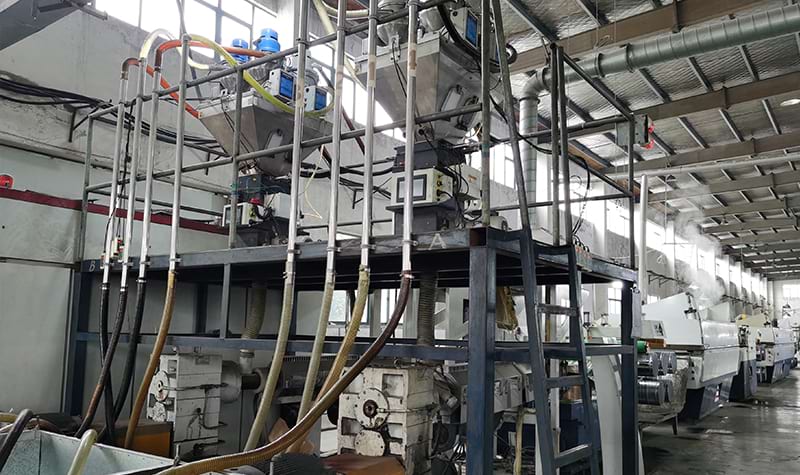
To truly understand how to mitigate heat, we must step onto the factory floor. The thermal properties of your lawn are determined long before it is rolled out onto the dirt. The secret to producing cooler, more comfortable grass lies in the precision of the manufacturing machinery.
The production of synthetic grass begins with a process called extrusion. Raw high-density polyethylene pellets are melted down in a massive hopper, mixed with color pigments, UV inhibitors, and thermal stabilizers, and then forced through a die to create continuous strands of yarn.
Older or budget equipment struggles to distribute these cooling additives evenly. If UV-reflective particles clump together due to inconsistent melt pressure, the resulting turf will absorb sunlight unevenly, creating hot spots. Conversely, utilizing a top-tier artificial grass extrusion machine fundamentally changes the game. Modern equipment features specialized screw designs (often with optimized L/D ratios) and precise melt pumps. This ensures a perfectly homogeneous blend at the molecular level, guaranteeing that every single blade has the exact same capacity to reflect infrared light.
The extrusion process is only as effective as its individual line components. Every stage of the journey—from molten plastic to finished yarn—impacts the final thermal performance. For instance, the spinnerets (the metal die plates with shaped holes) dictate the physical profile of the yarn. If a die is poorly machined, the yarn may have structural weaknesses that cause it to lay flat, exposing a massive surface area to direct sunlight.
Think about the quenching process. When the hot, extruded yarn hits the cooling water bath, rapid and controlled cooling locks in the internal crystalline structure. Manufacturers who prioritize high-quality artificial grass yarn material production understand that upgrading components like precision cooling tanks, hot air ovens, and drawing rollers directly translates to a stronger, more heat-resistant end product.
Color plays a massive role in thermal dynamics. It is a basic principle of physics: dark colors absorb light and convert it into heat, while lighter colors reflect it. Historically, artificial grass was manufactured in dark, monochromatic green shades to mimic mature natural lawns. This inadvertently maximized heat absorption.
Today, advanced factory lines utilize A/B co-extrusion technology. By leveraging a high-end PE grass yarn production setup, manufacturers can simultaneously spin lighter shades of green—such as lime or field green—with darker tones in a single blade. This dual-color approach not only provides a highly realistic, multi-dimensional aesthetic but also significantly increases the overall albedo (reflectivity) of the turf. Lighter colors integrated directly into the monofilament structure naturally reflect a higher percentage of solar radiation away from the surface.
The market shift toward climate-adaptive landscaping has pushed chemical engineers to make infrared-reflective technologies and evaporative cooling systems a baseline requirement rather than a niche luxury.
The most significant advancement in creating heat-resistant turf is the integration of IR-reflective pigments. During the extrusion phase, microscopic IR-reflective particles are blended into the PE resin. Instead of absorbing the infrared rays that generate heat, these particles act like tiny mirrors, bouncing the light back into the atmosphere.
Empirical field tests demonstrate that yarns treated with high-quality IR-reflective additives can reduce surface temperatures by 15% to 20% compared to untreated standard yarns under identical environmental conditions. The grass remains visibly vibrant green while performing thermodynamically like a lighter, reflective surface.
To mimic the natural transpiration of organic grass, the industry developed evaporative cooling systems. These are typically applied as specialized infills, such as ceramic-coated silica sand or hydrophilic organic materials.
These systems act like microscopic sponges. They capture and store moisture from rain, irrigation, or morning dew. As ambient temperatures rise, the stored moisture slowly evaporates. This phase change from liquid to gas absorbs thermal energy from the surrounding turf, actively lowering the surface temperature by up to 30°F to 50°F for days at a time, depending on local humidity levels.
Beyond chemical composition, the physical geometry of the grass blade is incredibly important. Flat, oval, or diamond-shaped yarns tend to reflect sunlight directly upward. Worse, they often lay flat under heavy foot traffic, creating a dense mat that suffocates airflow and traps heat.
To combat this, engineers have developed complex yarn profiles shaped like the letters W, C, and U. These corrugated shapes serve two distinct purposes. First, they provide structural memory, allowing the blades to spring back upright after being walked on, which promotes cross-ventilation near the base. Second, the complex curves and ridges of a W-shaped blade diffuse sunlight in multiple directions rather than absorbing it directly. This scattering of light significantly reduces surface heat buildup.
Even with the best manufacturing technologies in place, synthetic lawns in extreme climates—such as the American Southwest or the Middle East—will still experience warming. Fortunately, there are highly effective, practical steps you can take to mitigate heat and ensure the yard remains usable year-round.
As established, crumb rubber should be strictly avoided in heat-sensitive installations. Facility managers and homeowners must specify alternative infills to optimize comfort:
Silica Sand: A cost-effective, non-toxic option that retains significantly less heat than rubber.
Walnut Shells or Coconut Coir: Organic infills that resist heat absorption and naturally hold moisture for evaporative cooling.
Treated Acrylic Sand: Premium infills designed specifically for high-end cooling systems, offering maximum moisture retention and antibacterial properties.
For immediate temperature relief during peak summer hours, practical environmental management works wonders. Strategically planting broad-canopy shade trees or installing UV-blocking shade sails intercepts solar radiation before it ever hits the plastic.
If you need to use the yard immediately on a scorching afternoon, giving the turf a quick, 3-to-5-minute rinse with a garden hose drops the temperature instantly. Because the synthetic fibers do not absorb water internally, the surface moisture evaporates rapidly, providing immediate thermal relief. In addition, routine brushing with a stiff-bristle broom keeps the fibers standing upright, allowing airflow to dissipate the radiant heat hovering just above the surface.
When evaluating a landscaping upgrade, stakeholders often weigh the initial capital expenditure against long-term utility. Premium cooling technologies inherently cost slightly more to manufacture than basic, untreated plastics. So, is the investment truly justified?
A common narrative against artificial grass cites extreme surface temperatures that render outdoor spaces dangerous for children or pets. While this is a valid concern for low-grade, legacy turf products paired with rubber infill, it is no longer an absolute truth. Investing in premium turf engineered with IR-reflective yarn and evaporative infills directly negates this objection. The upfront premium ensures that the landscape remains functional and comfortable, thereby protecting the overall property value.
Furthermore, high-quality PE yarn is highly UV-stabilized, offering a lifespan of 15 to 20 years. Over this period, the complete elimination of daily irrigation, gasoline-powered mowing, and chemical fertilizers heavily offsets the initial manufacturing footprint. When cooling technologies are integrated, the turf requires minimal water, preserving thousands of gallons annually in drought-prone regions. The return on investment for a high-quality cooling system is exceptionally strong.
Selecting the right product requires looking past the surface aesthetics. You need to ask technical questions about the manufacturing process. Use this actionable engineering checklist for your next project:
Verify the Polymer Base: Insist on 100% PE (Polyethylene) for the primary blades rather than Polypropylene or Nylon. This ensures a strong baseline of thermal resistance.
Audit Extrusion Additives: Ask the supplier if their yarns are manufactured using IR-reflective masterbatches. Request technical data sheets (TDS) to verify their temperature reduction claims.
Select Advanced Micro-Profiles: Opt for W-shape, C-shape, or U-shape yarns that diffuse light and promote airflow. Avoid flat yarns at all costs.
Specify Co-Extruded Colors: Demand dual-color or multi-color monofilaments that incorporate lighter greens to increase the turf's overall albedo (reflectivity).
Mandate Evaporative Infill: Explicitly prohibit black crumb rubber in the contract. Pair the turf with a hydrophilic sand or organic infill to maximize active temperature control.
Yes, artificial turf generally gets hotter than real grass. Natural grass cools itself biologically through transpiration, releasing water vapor into the air. Synthetic materials cannot do this and naturally absorb sunlight. However, modern cooling technologies, reflective pigments, and specialized evaporative infills significantly bridge this temperature gap, making synthetic lawns much more comfortable than older legacy products.
Polyethylene (PE) is widely considered the best material for hot climates. It offers an excellent balance of durability, softness, and UV resistance. When PE is combined with infrared-reflective additives during the extrusion process, it provides superior heat resistance compared to denser materials like Nylon or heat-sensitive plastics like Polypropylene.
Absolutely. The color and density of the infill are major contributors to heat retention. Dark materials like black crumb rubber absorb massive amounts of solar radiation and act as heat sinks. Switching to lighter-colored infills, such as tan silica sand or natural organic materials, drastically reduces the amount of heat absorbed and radiated back to the surface.
Evaporative cooling systems are highly effective, but their duration depends on local weather conditions. After being hydrated by rain or a hose, the cooling effect typically lasts for 3 to 4 days in moderate summer conditions. In extremely dry, desert climates with low humidity, the moisture may evaporate faster, requiring a quick 5-minute rinse every 1 to 2 days to reactivate the cooling properties.
The absolute fastest way to cool down a synthetic lawn is to lightly spray it with a garden hose for just a few minutes. Because the plastic fibers do not absorb the water, the moisture sits on the surface and evaporates rapidly. This evaporative process pulls the heat away from the turf, dropping the surface temperature almost instantly so the yard can be used comfortably.
The demand for cooler, climate-adaptive synthetic grass is reshaping the market. To produce turf that meets these rigorous thermal standards, manufacturers must rely on precision engineering. If you are looking to upgrade your factory capabilities with industry-leading extrusion machinery, or if you need to source premium components that guarantee flawless IR-additive integration, explore the cutting-edge solutions at JDS Tex. Upgrading your production line today ensures your products remain competitive, comfortable, and highly sought-after in tomorrow's market.