Views: 0 Author: Site Editor Publish Time: 2025-12-31 Origin: Site
The demand for high-quality artificial grass is soaring, particularly for landscaping and sports fields. As manufacturers work to meet this demand, they face challenges in producing durable, consistent, and cost-effective turf.In this article, we will explore how Artificial Grass Extrusion Machines boost manufacturing efficiency, reduce costs, and improve the quality of synthetic grass.
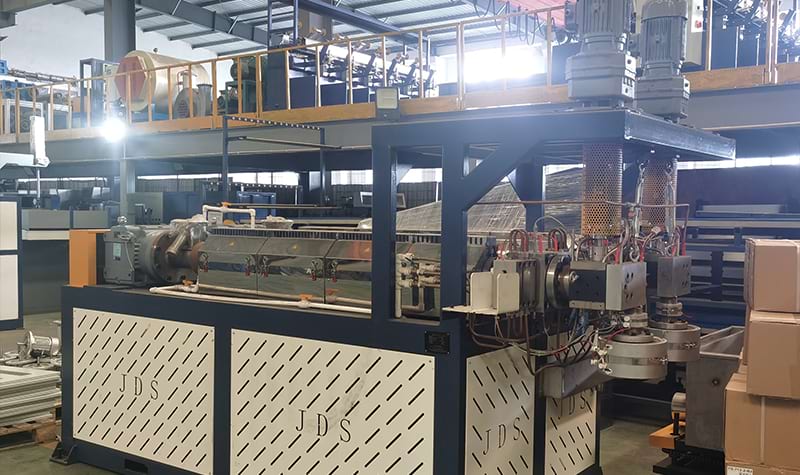
An Artificial Grass Extrusion Machine is designed to produce synthetic grass fibers, which form the base of artificial turf. The process starts by melting plastic pellets, typically made of polyethylene or polypropylene, and shaping them into long strands that resemble grass fibers. These fibers are then cooled, solidified, and wound into rolls for further processing.
The extrusion process gives manufacturers control over the fiber's thickness, texture, and color, ensuring the final product meets the required standards for applications like landscaping, sports fields, and recreational areas. These machines play a key role in scaling production while maintaining the quality and consistency of the artificial grass fibers, making them essential in modern turf manufacturing.
An Artificial Grass Extrusion Machine is composed of several key components, each playing a vital role in ensuring the production of high-quality synthetic grass fibers:
Component | Function |
Extruder | Heats and melts plastic pellets into a uniform, pliable paste, ready for extrusion. |
Spinneret | A perforated metal plate that shapes the extruded material into continuous fibers, similar to grass. |
Cooling System | Cools the extruded fibers, solidifying them into their final form. |
Winder | Collects and winds the cooled fibers onto reels for storage and further processing. |
Each of these components is integral to the continuous production process. The extruder melts and feeds the plastic material, while the spinneret shapes it into strands that are quickly cooled and collected. The precision of each component ensures the consistent quality of synthetic grass fibers, leading to a uniform and durable final product.
While traditional methods such as tufting and weaving are still commonly used in artificial grass production, Artificial Grass Extrusion Machines offer significant advantages. Unlike tufting, which involves attaching individual fibers to a backing material, extrusion machines directly create the fibers from raw plastic pellets, allowing for a more streamlined and cost-effective process.Extrusion produces continuous, uniform strands, leading to fewer inconsistencies and less waste. Additionally, the extrusion process is more energy-efficient, and it allows for the integration of recycled materials into the manufacturing process, making it more environmentally friendly. Compared to tufting or weaving, which are more labor-intensive and time-consuming, Artificial Grass Extrusion Machines offer greater speed, precision, and scalability.
● Extrusion Machines: Produce up to 500,000 sq ft/day of synthetic grass, significantly increasing production speed.
● Traditional Methods: Limit production to 50,000 sq ft/day, slowing down overall output.
● Impact: Faster production helps meet rising demand, reduces lead times, and enhances customer satisfaction, ensuring quicker delivery of high-quality turf.
Production Method | Waste Reduction | Material Efficiency |
Extrusion Machines | Up to 30% less waste | Efficient use of raw material, maximizing production. |
Traditional Methods | Higher waste levels | More scrap and off-cuts, leading to inefficiency. |
● Benefit: Extrusion Machines reduce waste, optimize material usage, and lower production costs, improving overall profitability.
● Environmental Advantage: Less waste means eco-friendly production, helping reduce the environmental impact of turf manufacturing.
● Flexibility: Adjust temperature, pressure, and speed to precisely control the texture, length, and density of synthetic grass fibers.
● Result: This ensures consistent, high-quality fibers tailored for specific applications like sports fields, landscaping, and more, meeting exact customer needs.
● Energy Savings: Up to 20% less energy consumption compared to traditional turf production methods, leading to cost savings.
● Cost Reduction: Automated processes reduce labor costs significantly, leading to faster returns on investment and increased profitability.
● Automation: Extrusion Machines operate autonomously, reducing the need for manual labor and increasing overall production efficiency.
● Consistency: Uniform fiber length, thickness, and color across each batch ensure high-quality, consistent results, especially for demanding applications like sports fields.
● Result: Fewer defects and returns lead to higher customer satisfaction and reduced costs, particularly in high-stakes applications where precision is essential.
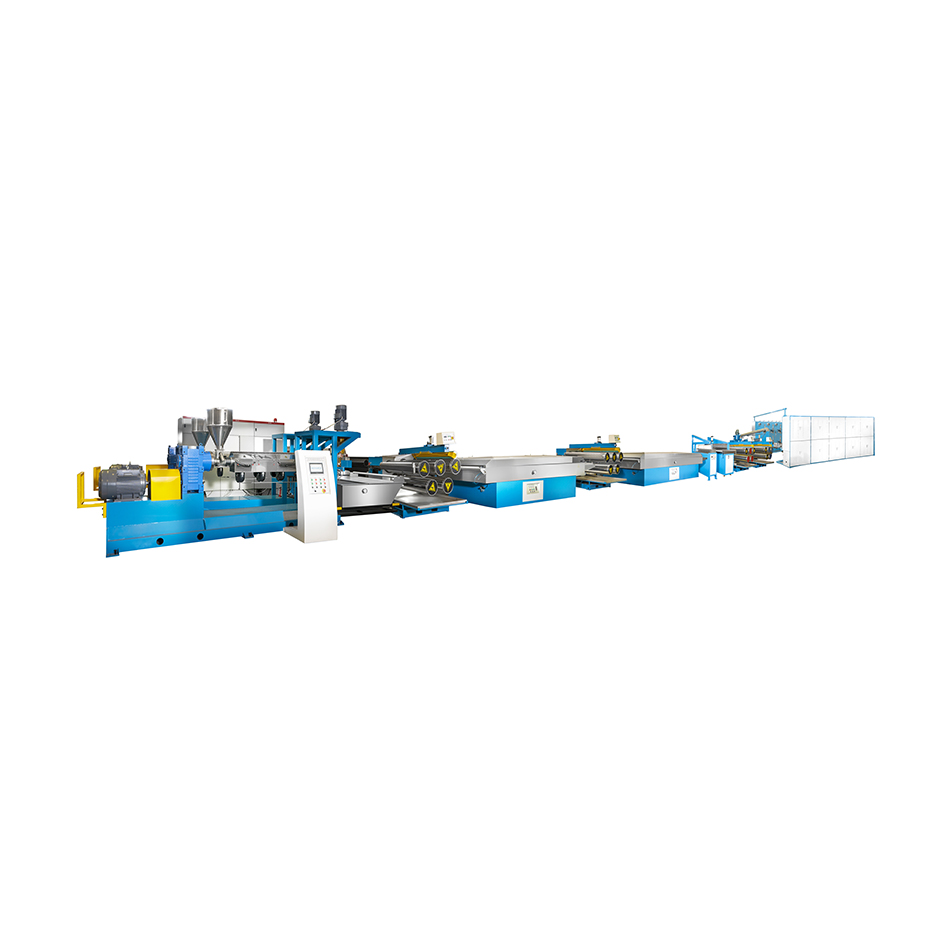
Sustainability is increasingly important in manufacturing, and Artificial Grass Extrusion Machines play a key role in minimizing environmental impact. Extrusion reduces the overall energy required for production and limits waste by recycling plastic materials and reusing production scraps. This contributes to a cleaner, more sustainable manufacturing process.
Many modern Artificial Grass Extrusion Machines are designed to incorporate recycled materials into the production process. By using up to 40% recycled plastic, these machines help reduce the reliance on virgin plastic, supporting a circular economy and reducing plastic waste in landfills.
Recycling in turf manufacturing not only helps conserve resources but also enhances the environmental credentials of companies producing artificial grass, making them more attractive to environmentally-conscious customers.
The automation provided by Artificial Grass Extrusion Machines helps reduce labor costs significantly. With the need for fewer workers and less manual intervention, manufacturers can lower their overheads while increasing efficiency. Some estimates suggest that labor costs can be reduced by up to 50% when switching from manual processes to extrusion.
Traditional Methods | Extrusion Machines |
Average Output: 50,000 sq ft/day | Average Output: 500,000 sq ft/day |
Requires more manual labor | Fully automated production |
Artificial Grass Extrusion Machines allow for a higher throughput, making it easier to scale production for large orders. Manufacturers can meet the growing demand for artificial turf without needing to increase their workforce or significantly upgrade their facilities.
Precision is crucial in the production of high-quality artificial grass. Artificial Grass Extrusion Machines ensure that each fiber is produced with uniform thickness and length, which improves the consistency and appearance of the final product. The ability to control these variables allows manufacturers to create grass that closely mimics the look and feel of natural turf, meeting both aesthetic and functional requirements.
With urbanization on the rise, cities are increasingly adopting artificial grass for landscaping and green spaces. Artificial Grass Extrusion Machines help manufacturers keep up with the growing demand for synthetic turf, ensuring that it meets the needs of urban planners and architects who require eco-friendly, low-maintenance solutions for public spaces.
Artificial Grass Extrusion Machines play a critical role in creating turf for sports fields, playgrounds, and recreational areas. The consistency and durability of synthetic turf are crucial for these applications, and extrusion ensures that the fibers are strong, resilient, and provide excellent performance under heavy use.
Artificial grass is becoming increasingly popular in both commercial and residential applications. Whether it’s a backyard lawn, a rooftop garden, or a commercial property, Artificial Grass Extrusion Machines enable manufacturers to produce the large quantities of synthetic grass needed for various uses.
Artificial Grass Extrusion Machines have revolutionized the manufacturing of synthetic turf, offering significant benefits in efficiency, cost reduction, and quality control. These machines not only help increase production rates but also reduce material waste and energy consumption. As sustainability becomes a priority for many industries, extrusion technology allows manufacturers to produce eco-friendly turf products using recycled materials.Manufacturers such as JDS provide a range of Artificial Grass Extrusion Machines that cater to different production needs, including straight monofilament yarn, curly yarn, and fabricated yarn. By adopting these advanced machines, businesses can scale their production, reduce costs, and ensure high-quality synthetic grass for various applications, from sports fields to residential landscaping.
A: Artificial Grass Extrusion Machines are specialized devices used to produce synthetic grass fibers by extruding melted plastic through molds, shaping them into grass-like strands. They play a key role in producing high-quality turf efficiently.
A: Artificial Grass Extrusion Machines increase production speeds, reduce material waste, and improve quality control. These machines streamline the process, allowing manufacturers to produce more turf at lower costs and with greater consistency.
A: Unlike traditional methods like tufting, Artificial Grass Extrusion Machines produce fibers directly from raw plastic, which reduces waste, increases speed, and ensures better consistency, improving overall manufacturing efficiency.
A: Artificial Grass Extrusion Machines help lower production costs by reducing waste, energy consumption, and labor costs. Their ability to produce large quantities efficiently allows manufacturers to increase profitability over time.
A: These machines reduce environmental impact by minimizing waste and using recycled materials. By integrating recycled plastics, Artificial Grass Extrusion Machines help create sustainable artificial turf products with a lower carbon footprint.