Views: 0 Author: Site Editor Publish Time: 2026-07-04 Origin: Site
Selecting the correct artificial grass yarn profile directly impacts product longevity, aesthetic realism, and manufacturing overhead. Producing high-quality synthetic turf is a complex engineering challenge. Turf designers face a critical decision every day. They must balance performance needs with material realities. The choice between straight and curly profiles dictates turf resilience. It determines infill requirements. It also dictates the specific extrusion infrastructure needed for production. In this article, we provide a technical comparison of straight versus curly yarn. We evaluate material inputs thoroughly. We also assess the production requirements for commercial buyers and manufacturers. You will learn how these profiles perform in the field. We will guide you through machinery selection and quality assurance testing. Understanding these variables ensures optimal surface performance.
Primary Function: Straight yarn serves as the primary "face" grass for aesthetic realism and softness, while curly yarn acts as the structural "thatch" layer to support the straight fibers and retain infill.
Material Variances: Straight fibers typically utilize Polyethylene (PE) for non-abrasive flexibility; curly fibers often use Polypropylene (PP) or Nylon for high tensile strength and shape retention.
Production Infrastructure: Manufacturing a dual-yarn system requires specialized equipment capable of handling different polymer melt points, including dedicated monofilament turf yarn machines and texturizing units.
Application-Driven Selection: High-traffic sports applications require different yarn combinations and extrusion profiles compared to low-traffic residential landscaping.
Producing durable synthetic turf requires a deep understanding of polymer science. You cannot rely on a single fiber design for all environments. The physical properties of the chosen artificial grass yarn dictate how the final product behaves. Engineers look at several key metrics to evaluate surface success. They test these materials rigorously before market release.
We evaluate turf performance using strict industry benchmarks. A successful synthetic grass installation must pass several critical thresholds. Manufacturers focus on three main areas:
UV Stability: Sun exposure degrades polymers over time. High-quality yarns contain UV inhibitors. These additives prevent fading and structural brittleness.
Pile Recovery Rate (Resilience): Grass blades must spring back after foot traffic. A high recovery rate prevents the field from looking flattened. It ensures consistent biomechanical response.
Abrasive Wear Resistance: Fibers rub against each other, shoes, and infill. Excellent wear resistance prevents splitting. It extends the functional life of the installation.
Historically, manufacturers used only one type of yarn per product. This approach causes significant performance issues. Single-yarn systems often suffer from rapid matting. The fibers lay flat under repeated compression. They lose their aesthetic appeal quickly.
To compensate, installers dump excessive amounts of heavy infill into the turf. They use silica sand or crumb rubber to force the blades upright. This reliance on heavy infill increases installation weight. It also creates a harsher surface for athletes or pets. Single-yarn systems simply lack built-in structural support.
Modern manufacturing embraces the dual-yarn standard. This technique involves co-tufting straight and curly fibers together into the same backing. It mimics natural root zones perfectly. The curly thatch holds the straight blades upright. This reduces the need for massive infill volumes.
This hybrid approach improves biomechanical performance drastically. It offers better shock absorption. It provides a safer, more natural foot-feel. The dual-yarn system represents the gold standard in contemporary turf engineering.
The straight fiber acts as the primary visual component of the turf. It provides the lush, green aesthetic people expect. Engineering straight artificial grass yarn requires a careful balance. You must achieve softness without sacrificing tensile strength.
Straight yarns dominate the surface contact area. They determine the initial touch and feel of the grass. A well-engineered straight blade offers low sliding friction. This prevents skin burns during athletic slides. It visually mimics natural grass blades beautifully. The soft texture makes it ideal for residential lawns and playgrounds. It delivers high aesthetic realism under diverse lighting conditions.
Industry experts overwhelmingly prefer Polyethylene (PE) for straight yarns. PE provides an unparalleled balance of softness and durability. It bends without snapping. It feels gentle against human skin. Unlike older polymer blends, modern PE resists splitting under pressure. It accepts color masterbatches easily. This allows manufacturers to create vibrant, multi-tonal green shades.
You cannot extrude straight yarn as a simple flat ribbon. Flat ribbons lack structural memory. They fold over easily and stay flat. To engineer resilience without curling, manufacturers extrude PE into complex cross-sectional shapes.
Shape Profile | Structural Benefit | Ideal Application |
|---|---|---|
C-Shape | Offers moderate resilience and excellent softness. The curve prevents total flattening. | Residential landscaping, pet turf. |
W-Shape | Features multiple structural ribs. Deflects heat well. Highly resilient. | High-traffic commercial areas, playgrounds. |
Diamond | Thicker at the center. Extremely durable. Resists splitting and heavy wear. | Athletic fields, heavy-duty sports arenas. |
Deploying straight yarn comes with inherent risks. The biggest threat is fiber flattening, commonly known as matting. If you install straight fibers without adequate stitch density, they will fail. They will also fail without proper infill levels. Furthermore, a lack of a supporting thatch layer guarantees premature flattening. You must support straight fibers from the base to ensure long-term performance.
While straight yarn provides the face, curly yarn does the heavy lifting. We often call it texturized yarn or thatch. This component hides near the backing. It provides the invisible mechanical support necessary for a premium turf system.
Think of curly yarn as a coiled spring. It creates a dense, intertwined thatch layer at the base of the turf. This layer encapsulates the infill tightly. It prevents infill migration during heavy rain. It also reduces splash when a ball or a foot strikes the surface. Most importantly, it grips the straight fibers. It holds them perfectly upright against gravity and foot traffic.
Curly yarn demands rigidity. It must hold its crimped shape permanently. For this reason, manufacturers rely heavily on Polypropylene (PP). PP is stiffer than PE. It offers higher tensile strength. It locks the crimp firmly into the polymer chain. However, there is a trade-off. PP is more abrasive than PE. Therefore, it stays tucked beneath the soft PE canopy. Nylon is another option for extreme high-end installations, offering unmatched heat resistance and spring.
Dense curly thatch layers change the infill equation completely. They allow designers to engineer non-infill systems. They also enable low-infill designs. The thatch itself acts as the shock absorber. This reduces the overall installation weight dramatically. It cuts down on maintenance efforts. Facility managers spend less time brushing and redistributing displaced rubber or sand.
Curly yarn is not foolproof. PP is naturally more susceptible to UV degradation than PE. If manufacturers use sub-optimal PP blends or skip UV additives, the thatch will turn brittle. It will turn to dust under the turf canopy. Additionally, the texturizing process involves heat and tension. If machines apply excessive heat, they compromise fiber integrity. The yarn weakens before it ever leaves the factory.
Yarn specification on paper means nothing without the right machinery. Production realities govern the final product. Yarn quality is strictly constrained by extrusion technology. Understanding the equipment helps buyers verify a manufacturer's true capabilities.
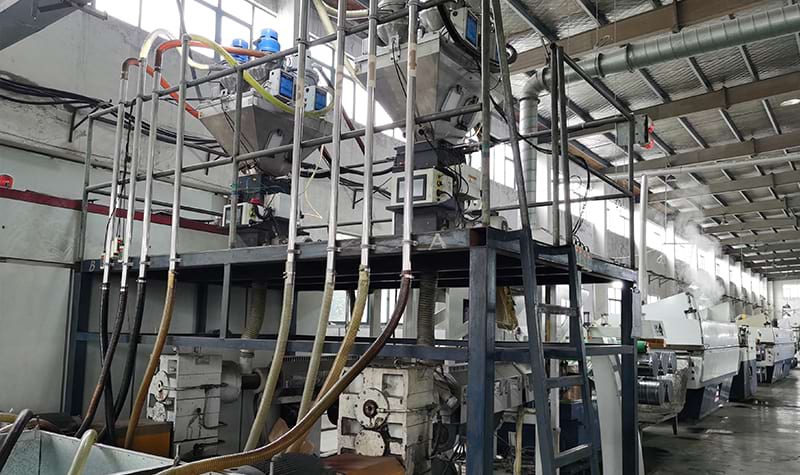
Manufacturing a premium dual-yarn system requires sophisticated hardware. You need distinct machines for different polymer behaviors. You cannot run PE and PP optimally on a basic, outdated line.
First, managing precise melt temperatures requires a dedicated PE PP grass yarn machine. These machines handle polymer blending with extreme accuracy. They mix virgin resin pellets with colorants and UV stabilizers. Temperature control is paramount. If the extruder runs too hot, the polymer degrades. If it runs too cold, you get weak, inconsistent strands.
Second, extruding complex cross-sections like W-shapes or Diamonds demands a high-quality monofilament turf yarn machine. The spinneret dies on these machines dictate the exact shape of the straight yarn. The quenching process (cooling the yarn in a water bath) sets the molecular structure. Precision drafting rollers then stretch the yarn. This stretching aligns the molecules, giving the straight yarn its final tensile strength.
Finally, creating the thatch layer involves secondary processing. You must route the extruded PP through a curly grass yarn extrusion line. This equipment includes texturizing units. These units heat the flat yarn, twist it or crimp it, and then cool it rapidly. This process permanently sets the crimp without weakening the polymer chain. Achieving this permanent memory requires exact tension control.
Modern extrusion lines offer massive advantages in scalability. Older machines struggled with changeovers. Switching from PE to PP used to waste hours and material. Today's advanced lines feature automated purging. They offer streamlined changeover efficiency. They also boast lower energy consumption per kilogram of yarn produced. High throughput capabilities ensure manufacturers can meet large volume demands without sacrificing consistency.
Selecting the right yarn profile requires a systematic approach. You must align the physical properties of the fibers with the intended application. A mismatch here guarantees field failure. We recommend evaluating your options based on specific use-case alignments and rigorous quality testing.
Every environment demands a unique structural approach. You must tailor the yarn ratios accordingly.
Landscaping & Pets: These areas see moderate, dispersed traffic. They require a high ratio of curly thatch. The dense thatch provides structural density. It keeps the turf looking full. It also aids in drainage, which is critical for pet urine. You should specify a softer PE straight yarn for maximum comfort.
Athletic Fields: Sports surfaces endure brutal, concentrated wear. They require taller straight yarns. These yarns must be engineered for sliding and rotational friction. They rely on specific infill ratios for shock absorption. Athletic yarns demand high-tensile extrusion profiles, such as Diamond or W-shapes. The curly thatch layer is often less prominent here, making room for performance infill.
Do not accept technical claims without proof. You must demand independent laboratory test results. Recommend these baseline tests for shortlisting any yarn:
UV Artificial Weathering Tests: Look for UVA/UVB exposure results. Laboratories test yarns for thousands of hours under intense light. They measure tensile strength retention. A passing grade ensures the turf will survive years of direct sunlight.
Lisport Wear Testing: This simulates years of cleat traffic. Studded rollers traverse the turf thousands of times. The test measures fiber splitting and weight loss. It is the ultimate benchmark for durability.
Tuft Bind Strength: This measures how hard you must pull to rip the yarn out of the backing. High tuft bind prevents athletes or pets from plucking fibers out of the field.
The choice between straight and curly yarn forms the foundation of synthetic turf engineering. Straight yarn dictates the feel and appearance of the surface. Curly yarn dictates the internal structure and longevity. Extrusion machinery dictates scalability and physical consistency. You cannot succeed without mastering all three elements. We recommend a proactive approach to sourcing. Always request technical data sheets (TDS) for both yarn types. Review the independent lab testing for UV resistance and wear. Finally, verify the extrusion capabilities of your manufacturing partners before finalizing product lines. Ensure they operate specialized machinery for both PE and PP processing.
A: Yes, but it is not recommended for most modern applications. An all-straight yarn system lacks internal structural support. It requires high volumes of heavy silica sand or rubber infill to keep the blades upright. Without heavy infill, the straight fibers will quickly mat down and flatten under foot traffic.
A: PE is significantly softer and more flexible than PP. It has a lower friction coefficient. This means PE prevents severe skin abrasions and burns during athletic sliding. PP is too rigid and abrasive for the primary face layer, making it uncomfortable for direct skin contact.
A: A curly yarn line includes specialized secondary processing units. After basic extrusion, the line routes the yarn through inline heating boxes. It applies specific mechanical tension. The machine then crimps or texturizes the yarn before cooling it rapidly. This locks the curly shape permanently into the polymer structure.
A: It heavily reduces infill dependency, allowing for low-infill or non-infill residential designs. However, heavy-duty applications like athletic fields still require infill. The infill acts as essential ballast to hold the turf down. It also provides critical shock absorption to protect athletes from impact injuries.