Views: 0 Author: Site Editor Publish Time: 2026-07-09 Origin: Site
For artificial turf manufacturers and investors, transitioning from purchasing synthetic yarn to producing it in-house represents a major operational shift. You gain ultimate control over your supply chain and product quality. An Artificial Grass Extrusion Line is the specialized industrial machinery used to melt plastic pellets. These plastics typically include Polyethylene (PE), Polypropylene (PP), or Polyamide (PA). The equipment forms these polymers into the synthetic grass fibers necessary for tufting. Moving this process internally demands careful planning and technical understanding. This article provides a transparent decision-stage framework. We help you understand the machinery and evaluate crucial technical specifications. You will learn how to assess the operational case for in-house extrusion. We guide you through the complexities of polymer processing. By mastering these core concepts, you can confidently navigate equipment selection. You will understand how to optimize facility planning effectively.
An artificial grass extrusion line controls the baseline quality, UV resistance, and durability of the final turf product.
Evaluating machinery requires balancing production capacity (kg/h) against energy consumption and facility space requirements.
Moving extrusion in-house requires significant upfront capital expenditure (CAPEX) but secures supply chain independence and profit margins at scale.
Supplier shortlisting should prioritize local spare parts availability, PLC automation standards, and proof-of-concept testing.
Buyers must understand the mechanical workflow before making a purchase. Knowing this process helps you identify potential bottlenecks in your future production line. The operation transforms raw plastic into finished yarn through several distinct phases. You must monitor each stage to maintain strict quality standards.
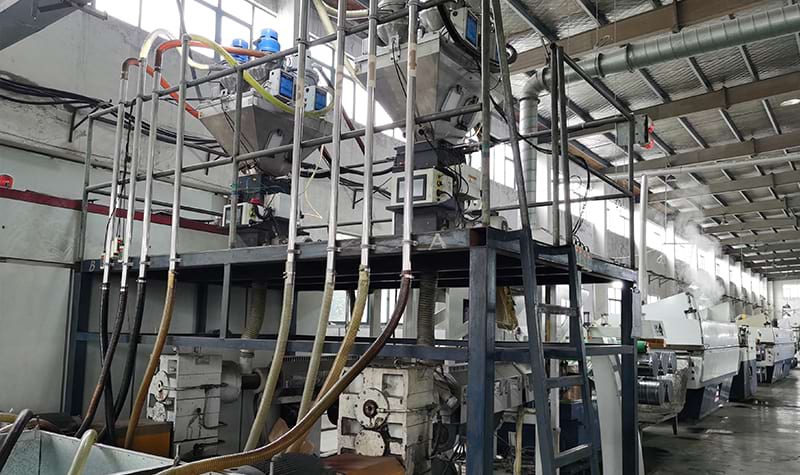
Material Mixing & Dosing: The process begins by blending base polymers. Common choices include Polyethylene or Polypropylene. Operators mix them alongside UV stabilizers and color masterbatches. You must also add specific performance additives. Precise dosing prevents weak spots in the final yarn structure.
Melting & Extrusion: A robust screw extruder receives this polymer blend. It creates a homogenous melt under intense heat and high pressure. The machine pushes this molten plastic through a specialized die head. This critical action forms either monofilament strands or a continuous fibrillated tape.
Quenching & Stretching: The hot polymer exits the die and immediately enters a water cooling tank. This rapid quenching solidifies the plastic instantly. Next, hot air ovens and stretching rollers take over. They stretch the material carefully. This action orients the polymer molecules linearly. The orientation gives the yarn its required tensile strength.
Fibrillation & Winding: The process varies slightly if you produce fibrillated yarn. The line slits the stretched tape into a precise net-like pattern. Finally, a spindle winder collects the finished yarn onto bobbins. It spools them neatly. These filled bobbins are then ready for the tufting machinery.
Common mistakes during these stages often ruin production runs. Poor temperature control in the extruder leads to degraded polymers. You must calibrate cooling tank temperatures precisely. Incorrect quenching causes brittle fibers. We recommend installing automated temperature sensors across all heating zones. This best practice ensures consistent melt flow continuously.
Understanding individual machine parts ensures you make an informed equipment choice. Each component plays a specific role in final yarn quality. You cannot compromise on these core elements.
Dosing systems and the main extruder form the heart of the setup. You must evaluate volumetric versus gravimetric feeders carefully. Gravimetric feeders offer superior additive control. They measure material by exact weight constantly. They ensure perfect color matching and reliable UV stabilizer distribution. Volumetric feeders measure by volume instead. They often struggle when bulk density changes. We strongly advise using gravimetric systems for artificial grass production.
Die heads and spinnerets dictate the physical characteristics of your product. The die design controls the precise yarn shape. Common shapes include C-shape, V-shape, and flat profiles. Consistent die precision maintains face weight uniformity across the entire turf roll. Any wear in the spinneret alters the yarn profile. You must schedule routine inspections for these critical parts.
Stretching ovens, also known as annealing units, lock in the physical properties. Temperature uniformity inside these ovens is absolutely critical. It prevents yarn shrinkage later. Proper annealing ensures long-term resilience on the sports field. Cold spots in the oven cause uneven stretching. This leads to weak fibers prone to snapping.
Finally, winding machines package the yarn for the next phase. You need automated tension control during this winding process. Consistent tension prevents yarn breakage during the subsequent tufting process. This technology saves significant material waste. It also reduces costly machine downtime.
Component | Primary Function | Quality Impact |
|---|---|---|
Gravimetric Dosing System | Mixes base polymers and chemical additives accurately | Ensures exact color consistency and uniform UV stability |
Extrusion Die Head | Shapes the molten polymer flow continuously | Defines the fiber profile and maintains face weight |
Annealing Ovens | Orients polymer molecules via controlled heat exposure | Maximizes tensile strength and prevents post-tufting shrinkage |
Spindle Winder | Spools the finished yarn onto individual bobbins | Boosts tufting efficiency and significantly reduces breakage |
This section establishes an objective framework for comparing different machinery models. You need reliable metrics to evaluate competing equipment options fairly. Relying on basic brochure specifications often leads to poor purchasing decisions.
First, assess throughput versus yield capacity. You must look at realistic kilograms-per-hour output against the required machine footprint. Do not rely solely on theoretical maximums. Practical yield often differs from perfect-condition estimates. You must account for routine screen changes and color transitions. These actions reduce actual daily output significantly.
Next, evaluate energy efficiency and operating costs deeply. Extrusion is an incredibly energy-intensive manufacturing process. You should calculate the exact power consumption per kilogram of yarn produced. Ask manufacturers for certified energy consumption data. Lower energy usage per kilo directly improves your long-term profitability. Upgrading to high-efficiency motors often pays off quickly.
Automation and quality control capabilities also require strict scrutiny. Look for advanced Programmable Logic Controllers. These PLC systems monitor melt pressure continuously. They track minute temperature fluctuations in real-time. They also handle automatic tension adjustments throughout the line. Good automation reduces reliance on manual operator interventions. It minimizes human error drastically.
Finally, consider overall machine versatility. Can the setup seamlessly switch between producing monofilament and fibrillated yarns? You should also verify if it can process both PE and PP resins. Highly versatile machines allow you to adapt to shifting market demands faster. They protect your investment against sudden consumer trend changes.
Adopting new heavy machinery introduces inevitable friction points. Understanding these implementation realities helps you prepare a robust deployment strategy. We highlight these challenges to ensure a smooth transition.
Facility requirements often surprise new operators entirely. Extrusion lines are massive industrial structures. They typically run 30 to 50 meters long. You must assess your concrete floor load capacities carefully. Check your facility ceiling heights for overhead crane clearance. Ensure your industrial power grid can handle the intense electrical load. You may need expensive electrical substation upgrades.
Operator skill gaps present another significant operational challenge. Running an extrusion line requires highly specialized polymer processing knowledge. It differs vastly from basic assembly work. You must factor in the cost and time for supplier-led training programs. Proper training prevents costly material waste during the initial learning curve. We recommend designating a core team for advanced troubleshooting training.
Maintenance downtime is an unavoidable reality of plastics extrusion. Acknowledge the inevitability of progressive screw wear and routine die cleaning. Ceramic heater bands will eventually require replacements. You must enforce predictable, scheduled maintenance routines diligently. Proactive maintenance preserves your equipment return on investment. Ignoring it guarantees catastrophic mechanical failures.
Producing yarn internally also shifts your raw material sourcing responsibilities. You now carry the supply chain burden for base materials directly. You must secure high-quality virgin resins consistently. Sourcing reliable color masterbatches becomes a crucial daily task. Poor raw materials will clog your melt screens rapidly. You must build strong relationships with polymer distributors.
Making the shift requires a solid strategic foundation. You must frame the decision around volume, quality, and resilience. This evaluation determines if internal production suits your business model.
Consider your strict volume thresholds first. You need a minimum annual production volume of artificial turf to justify the capital expenditure. Small operations might struggle to amortize the massive equipment costs. High-volume manufacturers quickly realize compounding operational savings. They eliminate the supplier markup on every kilogram of yarn. Analyze your past three years of yarn consumption. This data forms your baseline return on investment calculation.
Quality control and research and development offer a massive competitive advantage. In-house production lets you develop proprietary yarn shapes independently. You control the exact UV additive ratios directly. This allows you to engineer highly specialized turf products tailored to specific climates. You can test new colors in days rather than months. Innovation speed increases dramatically when you control the extruder.
Supply chain resilience is another major strategic factor. Producing your own yarn mitigates the severe risks of delayed international shipments. It protects your operation from volatile third-party pricing fluctuations. Global shipping bottlenecks will no longer halt your tufting machines. You gain absolute predictability in your production schedule.
Strategic Metric | Outsourced Yarn Procurement | In-House Extrusion Operations |
|---|---|---|
Quality Control Level | Highly dependent on external supplier standards | Complete, granular control over polymer formulas |
Supply Chain Risk | High vulnerability to global shipping delays | Low vulnerability; fully integrated local process |
R&D Iteration Speed | Slow cycles constrained by vendor timelines | Rapid prototyping and immediate physical testing |
Operational Focus | Requires expertise in assembly and tufting only | Demands complex polymer processing knowledge |
Procuring the right equipment demands actionable next steps. You need a structured approach when consulting our Artificial Grass Extrusion Guide to shortlist the best vendors. Proper vetting prevents costly procurement disasters.
Always demand a comprehensive proof of concept demonstration. Require suppliers to run a test batch using your specified masterbatch. This step verifies critical denier consistency. It ensures adequate tensile strength under real-world conditions. Never buy machinery based on theoretical simulations alone. You must inspect the physical yarn samples thoroughly.
Compliance and safety certifications cannot be overlooked during evaluation. Ensure the machinery meets strict regional industrial safety standards. Verify all electrical compliance documentation, such as CE or UL marks. These certifications protect your workforce from hazards. They also satisfy local regulatory bodies and insurance providers. Non-compliant machinery poses massive legal liabilities.
Finally, evaluate their after-sales infrastructure meticulously. Prioritize vendors who guarantee incredibly fast delivery of critical wear parts. You need rapid access to replacement screws, dies, and winder components. Excellent suppliers also offer remote diagnostic support. They can access your PLC over secure networks. This feature allows them to troubleshoot software issues instantly. It minimizes expensive unplanned downtime significantly.
Investing in an artificial grass extrusion line is a strategic move to vertically integrate your manufacturing. It grants you total control over material formulas and production timelines. You eliminate reliance on external yarn suppliers and protect your long-term margins. This integration requires careful planning but yields immense operational benefits.
Conduct a comprehensive facility audit to confirm physical space and power grid availability.
Map your current annual yarn expenditure against the quoted operational costs of a new line.
Verify local environmental regulations regarding industrial cooling water usage and plastic recycling.
Request formal equipment demonstrations and physical test runs before signing any procurement contracts.
A: These industrial machines require substantial floor space. A standard line typically ranges from 30 to 50 meters in length and 4 to 6 meters in width. You must also allocate additional clearance around the machine for safe operator access, raw material staging, and routine maintenance activities.
A: Yes, many modern extrusion lines offer this versatility. Manufacturers achieve this by utilizing modular die heads. You simply swap the die head and engage specific fibrillation roller additions further down the line. This flexibility allows you to switch product types based on varying market demands.
A: The primary base polymers are Polyethylene (PE) or Polypropylene (PP) resins. To achieve the final turf characteristics, you must blend these base plastics with color masterbatches for the grass hue. You also need UV stabilizers and other performance additives to ensure outdoor durability.
A: Setting realistic expectations is crucial for your production schedule. Installation and commissioning typically require 2 to 4 weeks of dedicated on-site work. This timeframe covers physical assembly, electrical integration, PLC programming, and rigorous test runs to ensure consistent yarn quality before full handover.