Views: 0 Author: Site Editor Publish Time: 2026-05-29 Origin: Site
Securing a competitive quote for an artificial turf project is only the first step. The true return on investment depends entirely on the chemical and structural integrity of the yarn. For commercial buyers, contractors, and high-end residential consumers, reading a product data sheet often feels like deciphering a foreign language. However, relying solely on surface-level aesthetics usually leads to premature matting. You might face rapid UV degradation or poor drainage if you ignore the underlying material science.
Mastering the basic knowledge of artificial grass yarn equips you to cut through misleading marketing claims. You will learn to evaluate technical spec sheets objectively. We will help you shortlist suppliers capable of meeting your specific site requirements. From polymer grades to extrusion quality, understanding these core elements ensures your turf performs exactly as expected over its entire lifespan.
Material dictates application: Polyethylene (PE) offers the best balance of softness and durability for most projects, while Polypropylene (PP) and Nylon serve specific niche or budget applications.
Specs require balance: Maximizing stitch rate without optimizing Dtex (yarn weight) leads to turf that feels luxurious but crushes under heavy traffic—the classic "feel vs. function" trade-off.
Shape defines resilience: Extruding yarn into engineered profiles (like W, C, or Diamond shapes) provides "memory" to the fiber, drastically reducing glare and preventing matting.
Manufacturing precision matters: Behind-the-scenes processes like artificial grass extrusion, grass yarn twisting, and rewinding dictate the final tensile strength and tuft consistency of the turf.
Selecting the wrong base material ruins landscaping projects. It leads to rapid deterioration or excessive heat retention. You will quickly face project failure and expensive replacement costs. Understanding the core materials helps you avoid these costly mistakes.
The industry relies on three primary materials to manufacture grass blades. Each polymer serves a very distinct purpose.
Polyethylene (PE): This represents the industry standard. PE offers superior UV resistance, a soft touch, and highly realistic movement. We recommend PE for medium-to-high traffic areas like residential lawns and parks.
Polypropylene (PP): PP provides a cost-effective option. However, it feels stiffer and remains highly susceptible to wear. You should reserve PP for low-traffic decorative zones, putting green bases, or underlying thatch layers.
Nylon (PA): Nylon stands out as extremely resilient and crush-resistant. Unfortunately, it feels abrasive, absorbs immense heat, and costs significantly more. Installers use Nylon strictly for specialized athletic applications or very high-impact zones.
Many top-tier manufacturers use carbon-chain grading to indicate polymer quality. This grading directly influences the Melt Flow Index (MFI). The MFI dictates how the plastic behaves under stress and temperature changes.
C4 (PP-based): These fibers remain very rigid. They offer a lower overall lifespan and struggle to bounce back after foot traffic.
C6 (Standard PE): This grade features a balanced MFI. It blends flexibility and durability perfectly. C6 serves as the go-to standard for most residential yards.
C8 (Advanced PE): C8 utilizes a higher MFI for superior snap-back resilience. It represents the ultimate benchmark for professional sports fields and heavy-use commercial spaces.
You must align the material directly to your climate and traffic expectations. Rule out Nylon entirely for high-heat climates to avoid burning hazards. Mandate C6 or C8 Polyethylene for any project expecting regular foot traffic. This simple rule prevents early material breakdown.
Best Practice: Always request a polymer breakdown on the spec sheet. Ensure the thatch layer uses a durable PP while the main blades use a C6/C8 PE.
Common Mistake: Buying cheap C4 turf for a busy backyard. The blades will flatten within a month and refuse to stand back up.
Buyers often assume higher density automatically equals higher durability. This false assumption leads to expensive over-specification or poor field performance. You must balance the weight of the yarn against how densely the factory stitches it.
Technical data sheets contain specific numerical values. You need to understand two primary metrics.
Dtex: This measures the weight in grams of 10,000 meters of yarn. A higher Dtex (such as 12,000+) indicates a thicker, more robust fiber. Thick fibers resist tearing and crushing.
Gauge & Stitch Rate: Gauge indicates the distance between stitch rows (e.g., 3/8 inch). Stitch rate measures the total stitches per square meter. Together, they determine the visual fullness of the turf.
Manufacturers balance these metrics to achieve specific results. A high stitch rate paired with a low Dtex creates a dense, feather-soft lawn. Unfortunately, this soft lawn will quickly flatten under heavy use. It simply lacks the structural mass to support weight.
Conversely, a lower stitch rate paired with a high Dtex creates a highly durable surface. This "springy" turf resists matting beautifully. However, it can feel slightly abrasive. Industry insiders often call this the "steel wool" effect. You must compromise between ultimate softness and ultimate durability.
You must match the Dtex-to-Stitch ratio to your exact use case. Prioritize a high Dtex for dog runs and athletic fields. Prioritize a high stitch rate and a lower Dtex for ornamental landscaping.
Application Type | Recommended Dtex | Stitch Rate Strategy | Expected Performance Outcome |
|---|---|---|---|
Ornamental / Display Yards | 6,000 - 8,000 | High (Dense padding) | Luxuriously soft, highly realistic, low resilience. |
Standard Residential Backyards | 9,000 - 11,000 | Medium | Balanced comfort and moderate snap-back. |
Pet Runs & Commercial Parks | 12,000+ | Low to Medium | Highly durable, resists flattening, easily cleanable. |
Professional Sports Fields | 14,000 - 17,000 | Low (Wider Gauge) | Maximum durability, aggressive grip, requires infill. |
Flat, rectangular grass blades look highly unnatural. They reflect too much sunlight, which creates an obvious plastic glare. Furthermore, flat fibers lack the structural integrity to stand upright over time. Engineered blade profiles solve these distinct problems.
Modern extrusion dies shape the plastic into specific cross-sections. These shapes grant structural memory to the blades. They bounce back eagerly after pressure.
Diamond Shape: This profile adds a central ridge down the middle of the blade. It provides straightforward durability while maintaining a surprisingly soft feel.
C-Shape / S-Shape: These designs mimic natural grass curves. The gentle arc offers moderate resilience. More importantly, the curve diffuses sunlight to reduce plastic reflection.
W-Shape / Corrugated: The W-shape acts as the ultimate structural memory fiber. The parallel concave surfaces disperse light brilliantly, entirely eliminating glare. The complex ridges provide maximum resistance to matting, making it ideal for high-traffic zones.
Be very wary of flat yarns sold at a premium price point. Always request close-up profile photos from your supplier. Better yet, demand physical samples to verify the blade shape in person. Use a magnifying glass if necessary. A premium price demands a premium, engineered profile.
Best Practice: Select W-shape or Diamond-shape yarns for front yards facing direct, intense sunlight. The glare reduction makes the lawn look remarkably natural.
Common Mistake: Ignoring the yarn profile entirely and buying based on color alone. Flat yarns will look like a shiny plastic mat within a year.
Even the most premium polymers will fail if the factory lacks precision. Poor temperature control and sloppy tension management during production destroy yarn strength. You must understand how suppliers operate their machinery.
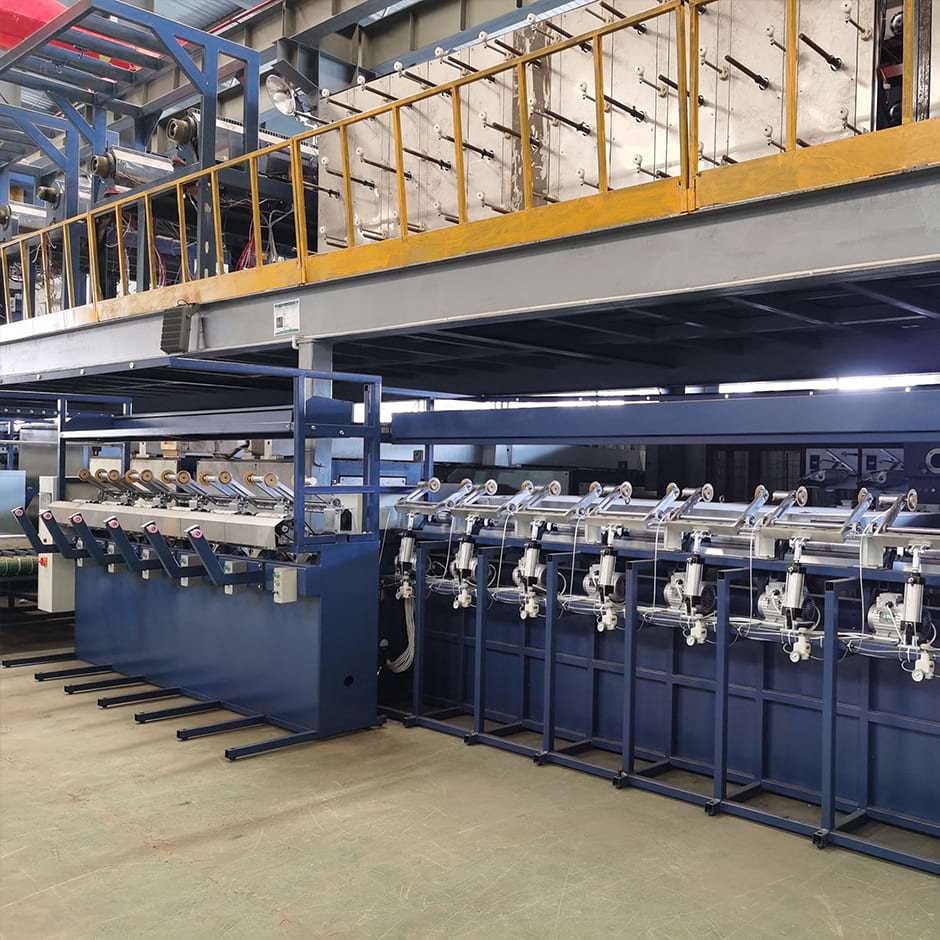
The Extrusion Phase: The critical first step requires an advanced Artificial Grass Extrusion machine. Here, operators melt raw polymer pellets, UV inhibitors, and colorants together. They force this molten mixture through shaped molds. If the factory uses poor temperature control here, it creates brittle fibers. These weak fibers will eventually snap under pressure. Creating high-quality Artificial Grass yarn relies heavily on precise cooling immediately after extrusion.
The Twisting Phase: Following extrusion, the material moves to Grass Yarn Twisting. Equipment twists multiple monofilaments or fibrillated tapes together. They form a cohesive yarn bundle before the tufting process begins. Proper twisting ensures the primary color and the thatch layer integrate smoothly. This step prevents the finished turf from looking patchy or uneven.
The Rewinding Phase: Finally, the factory performs Grass Yarn Rewinding. This step transfers the extruded, twisted yarn onto spools under exact tension. Inconsistent rewinding tension causes massive quality control failures. It leads to uneven tufting on the final backing. You will see missed stitches or wildly varying pile heights if the tension slips.
When auditing a B2B supplier, do not just look at their brochure. Ask for documented quality control protocols. Specifically, request data covering their extrusion cooling rates and rewinding tension calibration. Reputable factories gladly share these engineering tolerances.
Marketing adjectives like "durable," "safe," and "luxurious" remain meaningless without verifiable data. You need third-party laboratory results to prove a product's worth. Independent testing removes the guesswork from your purchasing decisions.
Evaluate your potential suppliers through these widely accepted industry standards.
Tuft Bind (Pull Force): This measures how tightly the backing holds the yarn. The tuft bind must exceed standard thresholds. Look for values greater than 30 Newtons. High tuft bind ensures pets or athletes cannot easily pull the yarn out of the backing.
Fiber Performance Index (FPI): Look for Labosport FPI ratings. Labosport is a highly respected testing institute. Their FPI system quantifies durability, resilience, and softness based on standardized stress tests. A high FPI score guarantees reliable field performance.
Compliance and Safety: Require REACH compliance or equivalent certifications. These frameworks ensure the yarn remains 100% free of lead and dangerous heavy metals. Safety certifications protect children and pets from toxic exposure.
Never accept a preliminary quote without an attached Technical Data Sheet (TDS). You must also demand the independent lab certification documents. Cross-reference the stated Dtex and Tuft Bind on the TDS against the laboratory results to verify authenticity.
Sourcing the right artificial turf requires a careful exercise in balance. You must weigh polymer chemistry against physical specifications like Dtex and stitch rate. Furthermore, you cannot ignore the importance of manufacturing precision during the extrusion and rewinding phases.
Use the technical spec sheet as your primary negotiation tool. Define your exact traffic requirements before contacting vendors. Specify the necessary yarn shape and Dtex upfront. Most importantly, demand undeniable proof of quality control in extrusion and twisting.
Request a customized physical sample kit alongside comprehensive technical data sheets today. Compare the yarn density, shape, and tuft bind directly against your specific project requirements to ensure absolute success.
A: Monofilament consists of individual, engineered blades designed for visual realism and high resilience. They bounce back well under foot traffic. Fibrillated yarn starts as a single flat tape slit to resemble a honeycomb pattern. Fibrillated yarn offers supreme infill retention. Manufacturers often use it in professional sports fields or as a supportive thatch layer.
A: Higher Dtex requires significantly more raw polymer material per square meter. This increased material volume inherently raises upfront production costs. However, it substantially reduces long-term replacement expenses by massively extending the overall lifespan of the turf, especially in commercial or high-traffic areas.
A: Manufacturers must thoroughly mix UV inhibitors into the polymer melt during the extrusion process. If operators rush the extrusion process or fail to calibrate the machinery, the inhibitors distribute unevenly. This poor mixing leads to rapid color fading and severe yarn brittleness the moment the turf faces intense sunlight.
A: Not necessarily. Face weight simply measures the total weight of the yarn per square yard. A high face weight made from weak, low-Dtex yarn will still mat down quickly under pressure. You must evaluate the face weight alongside the yarn's engineered shape and its specific polymer grade.